





導語/編者按:
關於AI,市場最常問的是「它會替代多少工作」。但更關鍵的變量,其實不在「崗位數」,而在「收入與需求的傳導鏈條」。當AI把越來越多任務從人類手中接走,效率提升的紅利未必自動變成大眾購買力——這會直接影響通脹、利率與增長中樞。換句話說,AI正在逼近一次宏觀再定價的分岔口。
一句話結論:AI最大的衝擊,不是「崗位替代率」,而是把更多「任務收益」從勞動端搬向資本端,從而改變長期的通脹與利率邏輯。
為什麼這件事重要:
•如果收益更集中,消費端更容易「跟不上供給」,經濟可能走向更低的利率與更長的增長陰影。
•如果AI主要是賦能,勞動通過新任務與技能升級重新獲得議價權,AI更像一次生產率革命。
現在就該盯的三條「進度條」:
1)勞動收入份額是否繼續下行;2)行業集中度是否繼續上升;3)算力擴張背後的電力、併網、融資是否成為硬瓶頸。
發生了什麼:AI從「技術熱」變成「資本開支戰」
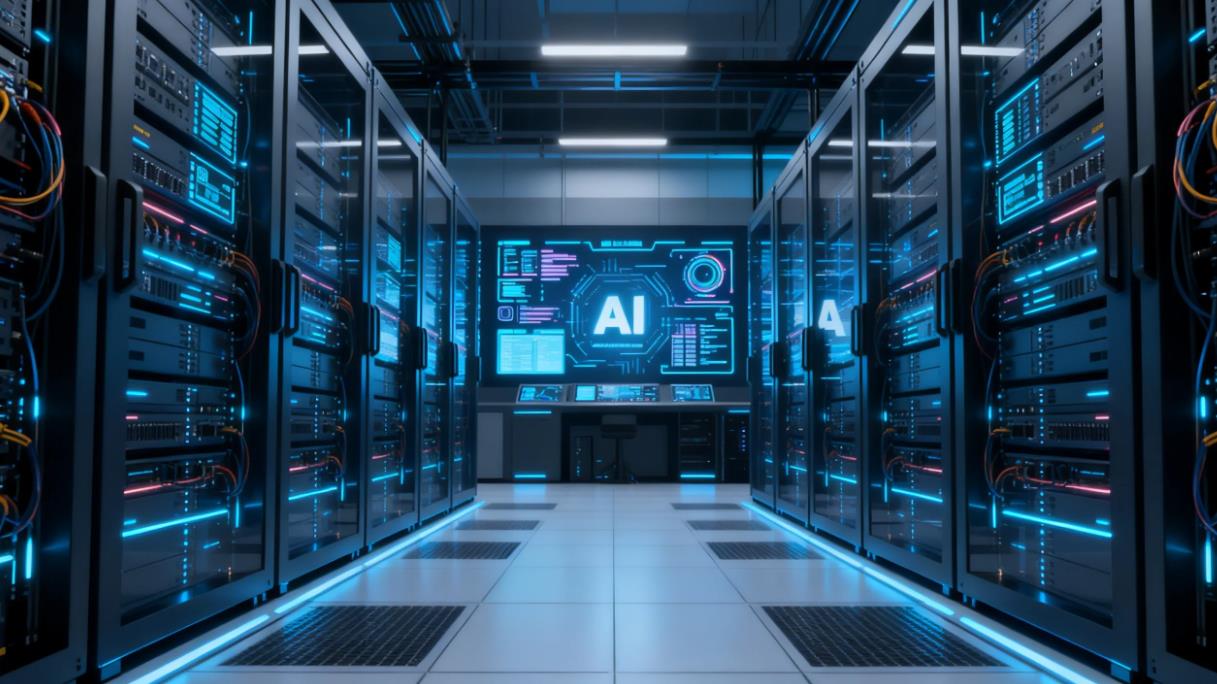
過去一年,AI不再只是模型能力的競賽,更是基礎設施的競賽:數據中心、算力芯片、網絡與電力配套,成為新的「工業體系」。巨額資本開支持續上調,意味着AI正在從應用側擴散到產業側——這既可能帶來生產率躍遷,也可能帶來更強的集中效應與分配壓力。
這就是為什麼:討論AI的宏觀影響,不能只看「裁員數字」,更要看「利潤—工資—消費」的鏈條是否順暢。
三個底層邏輯:把複雜問題講清楚
邏輯一:AI不是先搶「崗位」,而是先吃掉「任務」
崗位是一個大盒子,任務才是裏面真正的零件。AI擅長接管那些標準化、可複製、可量化的環節:寫、算、查、改、對齊、總結、生成。於是很多行業會出現一個新現象:人還在崗位上,但崗位里的高頻任務被AI拿走,人的價值被迫轉向更高階的部分——判斷、溝通、負責、創意與最終決策。這不是「就業消失」的瞬間故事,而是「工作被重構」的長期過程。
邏輯二:供給變強,不等於需求就會更強
AI帶來效率提升與成本下降,供給側更強是大概率。但宏觀經濟能否更強,取決於需求端是否能把新增供給「買回去」。這裏有個經常被忽略的事實:
收入越集中,新增收入轉化為消費的比例往往越低。
當更多收益沉澱在少數資產負債表上,消費傳導就可能變弱,出現「東西很多,但購買力不足」的結構性矛盾。
邏輯三:AI越像基礎設施,越容易「贏家通吃」
AI的規模經濟更強:算力、數據、模型、渠道、生態一旦形成閉環,頭部平台的優勢會被放大。行業集中度上升會帶來兩件事:
1)利潤更集中;2)勞動議價權更難跟上。
最終,效率紅利未必均勻擴散,反而可能加速分化。

兩條路徑:AI宏觀分岔口到底分在哪?
路徑A:替代型AI(更像「把任務收益推向資本」)
典型特徵:
•任務被快速自動化,勞動收入增長跑不贏利潤增長;
•行業集中度抬升,頭部企業擴張更快;
•消費端承壓,需求更容易偏弱。
宏觀結果更可能是:
低通脹壓力、低利率中樞、增長更依賴資產與資本開支,而非大眾消費的自然擴張。經濟會更「看似高效」,但更容易出現結構性失衡。
路徑B:賦能型AI(更像「讓勞動升級並創造新任務」)
典型特徵:
•AI替代的是低價值步驟,釋放人去做更高價值環節;
•再培訓與組織重構跑得足夠快;
•新服務、新崗位、新行業能接住被重構的勞動力。
宏觀結果更可能是:
生產率上行,需求並未塌陷,利率與通脹更接近歷史範式。AI的紅利更像「技術擴散」,而不是「分配擠壓」。
一句話總結:兩條路徑不是由AI決定的,而是由制度、組織與人才升級速度決定的。
這場再定價,誰最關鍵?不是模型,而是「制度反應速度」
歷史反覆證明:技術紅利能否變成普遍福祉,不取決於技術多先進,而取決於社會是否及時完成三件事:
1)競爭秩序:防止基礎設施型平台形成過強鎖定;
2)再分配工具:讓稅制與公共支出跟上結構變化;
3)安全網與再技能化:讓轉型期的摩擦成本可控,讓勞動力能「換賽道」。
AI時代的風險,不是創新本身,而是創新太快、制度太慢。
給企業與投資者的一張「行動清單」
企業(尤其是大企業與產業平台):
•把AI項目從「上工具」升級為「重構流程」:誰負責、如何閉環、如何量化價值;
•用AI「放大人」,而不是單純「替人」:把人從重複勞動中釋放出來,轉向更高階任務;
•把數據、合規、人才體系當成同等重要的基礎設施。
投資者與市場參與者:
•盯「勞動收入份額」而非只盯就業總數;
•盯「行業集中度/平台議價權」而非只盯單一公司估值;
•盯「算力背後的電力、併網、融資」而非只盯模型參數;
•判斷AI投資回報兌現節奏:投入很快、變現很慢時,市場會先獎勵敘事,再考驗現金流。

結語:AI不是一個行業,而是一場宏觀再定價
AI真正改變的,是經濟中最難被注意、卻最決定長期走向的那條線:收益如何分配、需求如何形成、增長如何被定價。
未來幾年,AI會繼續更強、更快、更普及。但我們更該問的是:它把紅利推向哪裏?是把效率轉化成更廣泛的購買力與更穩的社會預期,還是把收益高度集中在少數資產負債表上?
這就是AI時代最重要的分岔口:不是「它有多聰明」,而是「它讓誰更有購買力」。
作者:羅柳斌、隋源
Wave Watch | AI Is Repricing the Logic of Growth: Not Jobs First, but Distribution
Editor’s Note:
The most common question about AI is still “How many jobs will it replace?” But the variable that matters more for markets—and for society—is how AI rewires the income-to-demand transmission chain. As more work is unbundled into tasks and those tasks migrate from people to machines, efficiency gains don’t automatically translate into broad purchasing power. That shift is what ultimately reprices the long-run anchors of inflation, interest rates, and growth.
One-sentence conclusion: AI’s biggest macro impact isn’t the headline “replacement rate,” but the way it moves more task-driven income from labor to capital—reshaping the long-term paths of inflation and rates.
Why this matters:
•If gains concentrate, demand can lag supply, pushing the economy toward lower rate regimes and a longer growth shadow.
•If AI primarily augments people, labor can regain bargaining power through new tasks and skills—making AI feel more like a productivity renaissance.
Three dashboards to watch right now:
1.labor income share, 2) industry concentration, 3) hard constraints behind compute expansion—power, grid access, cooling, and financing.
What’s Happening: AI Has Shifted from “Tech Hype” to a Capex Contest
Over the past year, AI has stopped being only a model race. It has become an infrastructure race: data centers, chips, networks, and—crucially—power. Large capital plans are being revised upward, and AI is spreading from “tools people try” into “industrial systems companies build.”
That’s why the macro conversation can’t be limited to layoffs or hiring headlines. The more relevant question is: Does the profit–wage–consumption loop still work smoothly?
Three Core Mechanics (No Jargon Needed)
Mechanic 1: AI doesn’t replace “jobs” first—it absorbs “tasks”
A job is a bundle. A task is the actual unit of work. AI excels at taking over the standardized, repeatable, measurable steps: drafting, summarizing, searching, formatting, coding patterns, review cycles, and basic analysis.
So a new reality shows up quickly: people stay employed, but the highest-frequency parts of their jobs get automated. Human value shifts—by force—toward judgment, accountability, relationship management, creativity, and final decision-making.
This is less an instant “employment cliff” than a longer “work redesign cycle.”
Mechanic 2: Stronger supply doesn’t guarantee stronger demand
AI can lower costs and raise productive capacity. That’s the easy part. The harder part is whether the demand side can “buy back” the new supply.
A simple and often ignored fact: the more income concentrates, the lower the share of incremental income that turns into consumption.
If a larger portion of gains sits on a small set of balance sheets, the demand transmission can weaken—producing a structural mismatch: more efficiency, less broad purchasing power.
Mechanic 3: The more AI behaves like infrastructure, the more “winner-take-most” dynamics appear
AI has powerful economies of scale: compute, data, models, distribution, ecosystems. Once a loop is formed, the leaders’ advantages compound. Rising concentration tends to produce two outcomes:
1.profits concentrate, and 2) labor bargaining power struggles to keep up.
Efficiency gains, then, may not diffuse evenly. They may accelerate polarization unless counterbalanced.
Two Paths: Where the Macro Fork Actually Splits
Path A: Substitution AI (gains flow disproportionately to capital)
Typical features:
•tasks automate fast; wage growth lags profit growth
•concentration rises; leaders expand faster
•demand becomes more fragile
Macro outcome tends to look like:
lower inflation pressure, lower rate anchors, growth driven more by asset cycles and capex than by broad consumer demand. The system can appear highly efficient—yet become structurally brittle.
Path B: Augmentation AI (labor upgrades and new tasks absorb disruption)
Typical features:
•AI replaces low-value steps and expands high-value human work
•reskilling and organizational redesign are fast enough
•new services, roles, and industries absorb the transition
Macro outcome tends to look like:
higher productivity without demand collapse; rates and inflation behave closer to historical patterns. AI becomes diffusion rather than distribution squeeze.
Bottom line: This fork is not decided by model intelligence. It is decided by institutional speed, organizational execution, and talent upgrading.
The True Bottleneck Isn’t the Model—It’s Institutional Response Time
History is clear: whether technology becomes broad prosperity depends less on innovation itself and more on whether society “rewires the system” in time. In the AI era, three levers matter most:
1.Competition and market structure: preventing infrastructure-style lock-in from becoming permanent.
2.Fiscal and distribution tools: aligning tax and public spending with the new income structure.
3.Safety nets and reskilling: controlling friction costs during transition and enabling real mobility.
The danger isn’t AI. The danger is AI moving faster than the institutions built for the prior economy.
A Practical Checklist for Companies and Investors
For companies (especially large enterprises and platforms):
•move from “deploying tools” to “redesigning workflows”: clear owners, closed loops, measurable outcomes
•use AI to amplify people, not only to reduce headcount—push humans upward into higher-order tasks
•treat data governance, compliance, and talent systems as first-class infrastructure
For investors and market participants:
•watch labor income share, not only aggregate employment
•watch industry concentration/platform pricing power, not only single-name valuations
•watch power + grid + cooling + financing behind compute—not just model parameters
•track monetization cadence: when build-out is fast but payoff is slow, narratives lead first—cash flows judge later

Closing: AI Isn’t One Sector—It’s a Macro Repricing
AI’s deepest change is subtle but decisive: who captures the gains, how demand is formed, and how growth is priced.
AI will keep getting stronger, cheaper, and more widespread. The question that will define the next cycle is simple:
Does AI translate efficiency into broader purchasing power and stable expectations—or does it concentrate gains on a few balance sheets and weaken the demand engine?
That is the AI era’s most important fork: not “how smart it is,” but who gets the buying power.
Authors:Liubin Luo/Nebula Sui





電話:(香港)852-2564 0768
(深圳)86-755-83518792 83518734 83518291
地址:香港九龍觀塘道332號香港商報大廈